Copyright Notice: All links on this page are from the Internet and are for teaching purposes only. Please respect the copyright. 版權說明:本網頁所有銜接源自網路,僅供教學使用,請尊重著作權。
About Laos Head bowed, palms pressed together in a prayer gesture, and the Laotian words, “sabai di” (good health) are called a nop and are used as a social greeting by Laotians. This narrow landlocked country in Southeast Asia is surrounded by China, Vietnam, Thailand, Cambodia and Myanmar. Laos is mostly mountainous and one of the few communist nations left in the world.
Laos was part of French Indochina until communist forces removed the French in 1954. Since 1975, the communists have maintained firm control. Closed for many years, Laos is one of the Asia’s poorest and most underdeveloped nations. Poverty is most prevalent on 5 percent of the land, where 75 percent of the 6.6 million Laotians live and depend on agriculture and natural resources. Economic reforms towards a more free market system have helped to lower poverty in recent years, but the economy still depends heavily on foreign investment and aid.
Following the communist takeover, Christianity was declared an enemy of the state. Two thirds of Laos’s Christian believers fled the nation, and those who remained had to meet in secret. Laos’s Buddhist majority was also suppressed. Today, Buddhism, which meshes easily with animist spirit worship, has again become the religion of over one half of Laotians. Christianity is one of four government-approved religions, but open churches are closely scrutinized. Intense persecution and restrictions still occur, mostly at the local level. Despite those pressures, the Church in Laos has shown encouraging growth through the evangelism of indigenous Laotian Christians.|
Pray for house church leaders who are singled out as targets of persecution to persevere with grace.Pray for Lao seekers to toss aside the social pressure to practice Buddhism and place their hope in the one true God.Pray for believers to unashamedly proclaim the Gospel to their neighbors despite close government monitoring.
Bordered by Thailand, Laos, Vietnam and the Gulf of Thailand in Southeast Asia, Cambodia is a country striving to rise from its scarred past. For the first time in many years, Cambodians are experiencing some measure of peace and freedom.
Its mostly Khmer-speaking population endured many violent governmental changes in the last half of the 20th century. Invasions by its neighbors, the Vietnam War, and the ruthless Khmer Rouge regime have left Cambodians distrustful and guarded. The trauma from Pol Pot’s Khmer Rouge regime (1975-1979), its mass evacuation of cities and towns, and the ruthless genocide of those they viewed as opposition can be seen across all generations. One result is that approximately one-half of the population is under 21 and uneducated. The economy has also suffered from the turbulent past, and foreign aid accounts for one half of the central government budget.
Since the 15th century, Buddhism has been the national religion in Cambodia. Today 85 percent of the population is Buddhist, while less than two percent is Evangelical Christian. In spite of past governmental attempts to eliminate all religions, Christianity has survived. Christians have worshiped openly since 1990, and indigenous church planters have established many new churches. The overwhelming social and emotional traumas of the past have left people open to the gospel. Mature Christian leadership is crucial to mobilize the churches to meet the needs of the people today.
Pray for a Gospel-driven end to corruption, drug trade, and human trafficking. Pray for transformative and united prayer across Cambodian churches. Pray for Jesus to bring great healing from the trauma of civil wars.
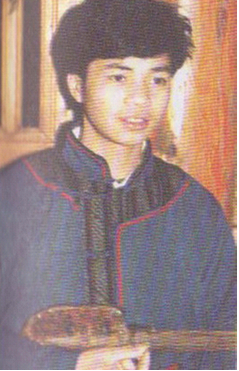
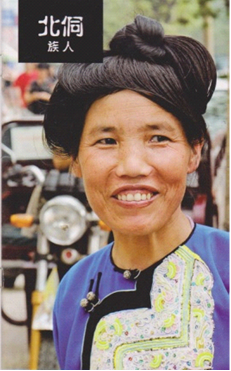
Introduction / History Although the Northern and Southern Dong speak different languages, they have been combined to form the official Dong nationality in China. The two groups are also culturally different. The Northern Dong have been assimilated into Chinese culture much more than their southern counterparts. The Dong call themselves Kam.
The Dong were not known by that name until this century. In the past they were part of the ancient Yue peoples, which dominated southern China. The Dong have many ancient myths and legends about the origin of the world.
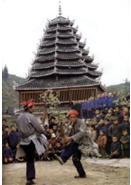
What Are Their Lives Like? One of the visually striking aspects of a Dong community is the Drum Tower. For centuries, the Dong have used the tower as the rallying point of the community: a place where the village gathers for an emergency, celebrates a wedding, and where young Dong couples sing love songs to each other. One source states that there are more than 30 distinct Dong dialect groups in China, and that marriage is rare between members of the various groups.
What Are Their Beliefs? The Dong believe in many gods. They regard certain mountains, trees, stones, and other nonhuman objects as sacred. This is reflected in the Dong custom of planting a fir tree for each newborn baby. Some Dong in remote areas practice a form of black magic called Tu. The Dong worship the kitchen god during the Spring and Fall festivals. A growing number of Dong youth are nonreligious.
Although they are considered relatively open to the gospel, the Dong remain one of the most neglected minority groups in China. Today there are an estimated 600 Northern Dong Christians, a meager number considering their large population of more than one million. Most Dong have never heard the gospel. Both Protestant and Catholic missionaries were active among the Dong prior to the introduction of communism in 1949. Several churches were built, but the gospel never took a firm hold among the Dong. Efforts are underway to produce a Roman script for them. Many Northern Dong could now be reached by Chinese-language media.
What Are Their Needs? Northern Dong people in Chinas will be lost in this life and the life to come without the guidance of Lord Jesus. They need someone to go to them representing Christ.
中國北侗人民若沒有主耶穌的帶領,今生和來世都會迷失,他們需要有人代表基督到他們中間。
Prayer Items Pray for the Lord to intervene in their families as he calls them to his side. Pray for workers who love them. Pray for them to be drawn to the Lord of lords. Pray for a growing movement of church planting in their communities.
More than one million speakers of the Northern Dong language live in the area of southern China where the provinces of Guizhou and Hunan meet. In addition, a small number live far to the north in Enshi County in southwestern Hubei. In 1990 the Northern Dong amounted to 36% of the total Dong population of 2.54 million. Source: Operation China, 2000
Enlarge the place of your tent, and let the curtains of your habitations be stretched out; do not hold back; lengthen your cords and strengthen your stakes. ISA54:2